Manage Netease Storage — Sync and Backup Files with RcloneView

Browse, transfer, and back up Netease's S3-compatible object storage in the same window you already use for every other cloud, without a separate CLI workflow.
Teams that provision storage through Netease's S3-compatible object service often end up scripting it separately from the rest of their cloud footprint, since most desktop file managers only understand mainstream consumer drives. RcloneView treats Netease like any other S3-compatible remote — same explorer, same sync jobs, same folder compare — so a Netease bucket sits next to Google Drive, Dropbox, or a local disk in one interface. RcloneView mounts AND syncs 90+ providers from one window, on Windows, macOS, and Linux.
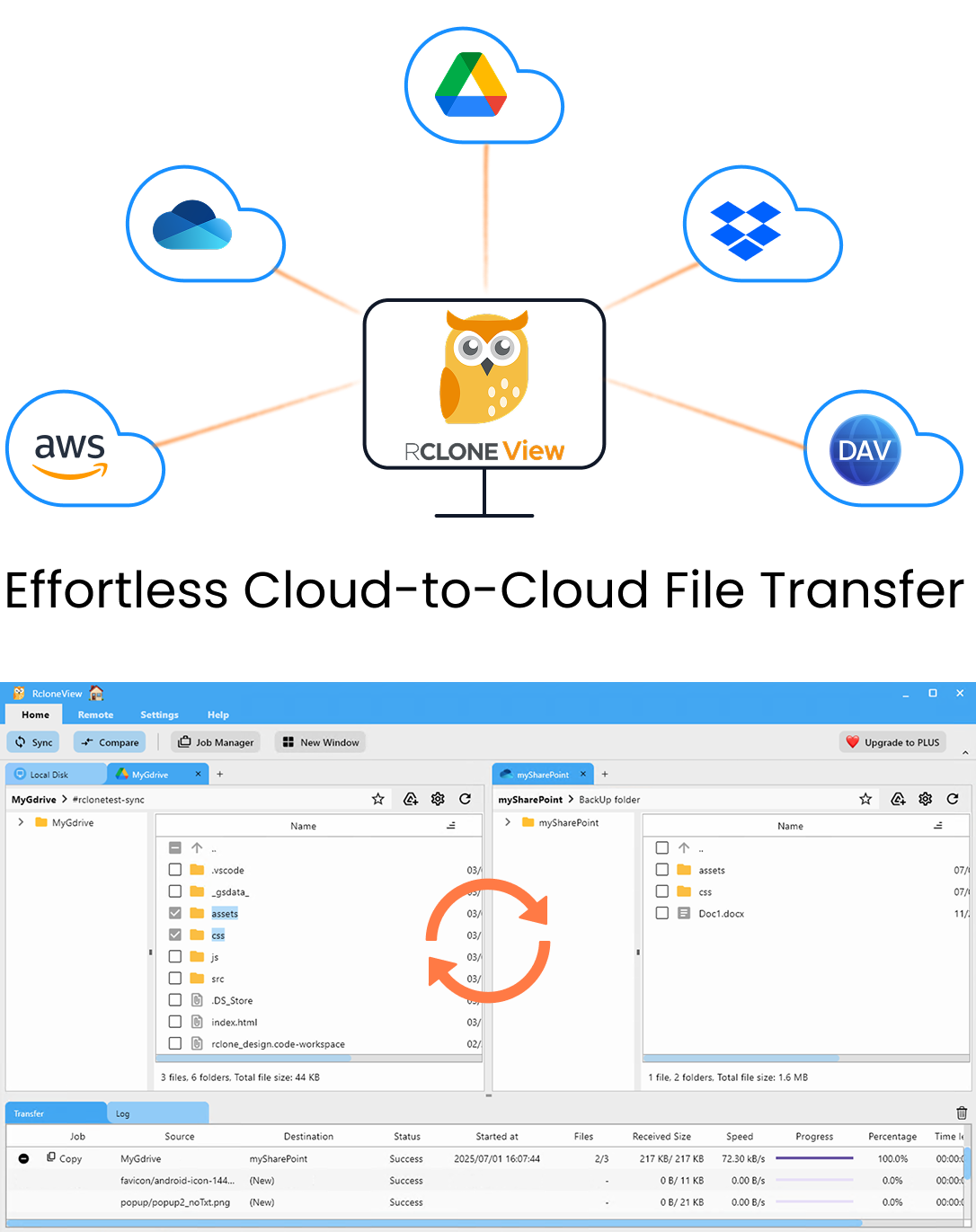
Manage & Sync All Clouds in One Place
RcloneView is a cross-platform GUI for rclone. Compare folders, transfer or sync files, and automate multi-cloud workflows with a clean, visual interface.
- One-click jobs: Copy · Sync · Compare
- Schedulers & history for reliable automation
- Works with Google Drive, OneDrive, Dropbox, S3, WebDAV, SFTP and more
Free core features. Plus automations available.
Connecting Netease Object Storage
Adding Netease to RcloneView follows the standard S3-compatible remote flow: create a new remote, select the S3 protocol type, then enter your Access Key ID, Secret Access Key, and the Netease endpoint URL for your bucket's region. Once saved, the remote appears as its own tab in the Explorer, and every folder inside it browses the same way a local drive does — no separate console tab or CLI session needed to check what's actually in a bucket.
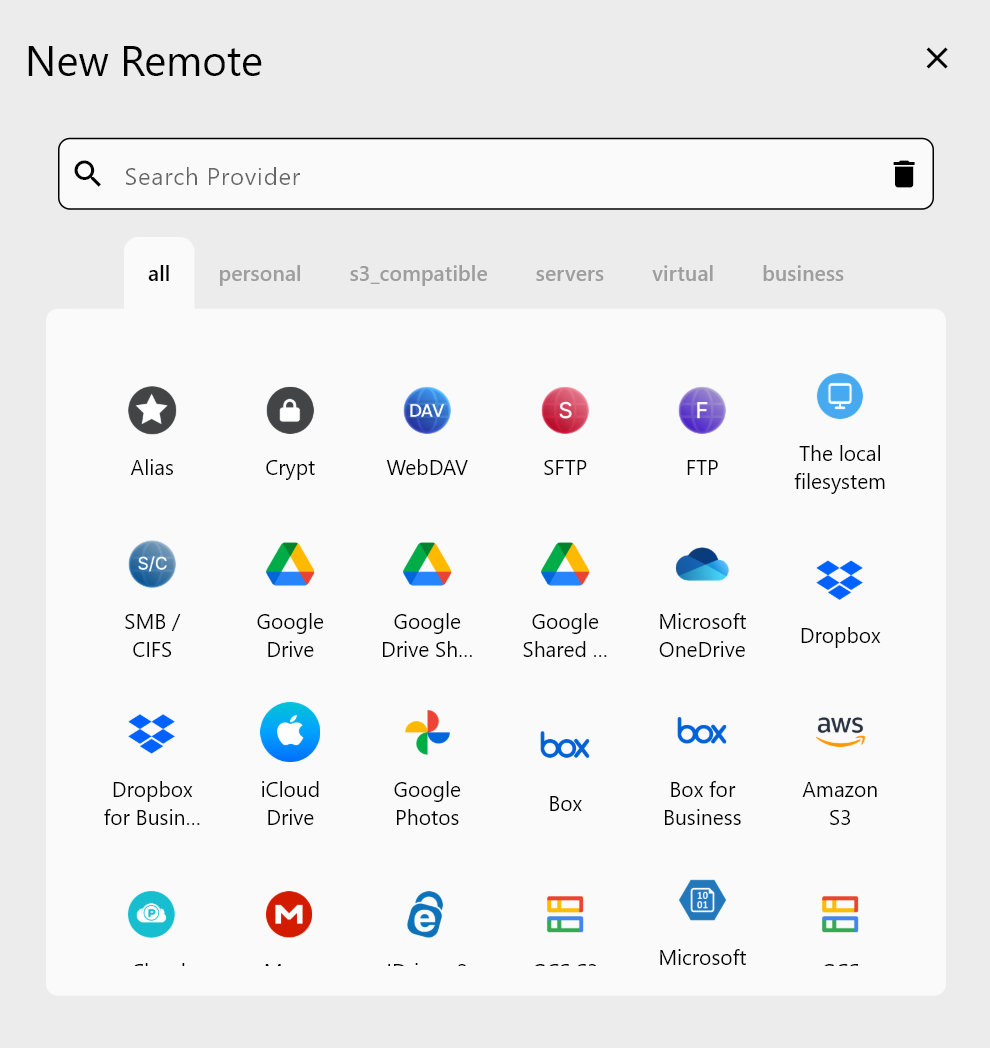
Because RcloneView stores each remote's configuration independently, you can register multiple Netease buckets — or the same bucket under different access scopes — side by side, then switch between them with a click instead of re-authenticating in a terminal each time.
Moving Data Between Netease and Other Clouds
Once Netease is connected, drag-and-drop between panels handles the cross-remote transfer automatically: dragging files from Netease into a different remote's panel triggers a copy, while dragging within the same Netease bucket moves the files. This makes ad-hoc migrations — say, mirroring a subset of objects from Netease into Backblaze B2 for redundancy — a matter of opening two panels rather than writing a one-off rclone command.
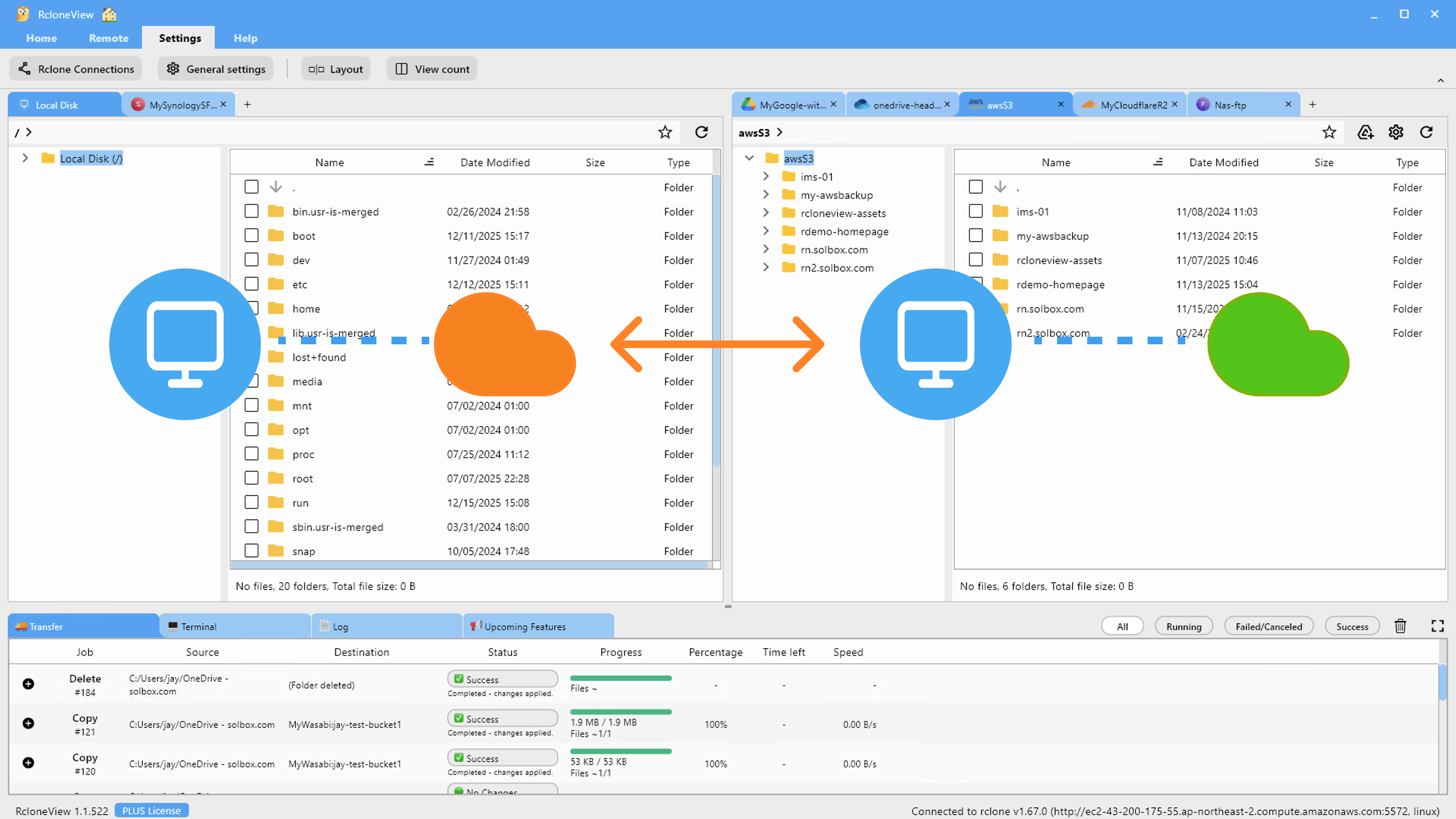
For repeatable transfers, the 4-step Sync wizard lets you set Netease as either source or destination, apply file-size or file-age filters, and run a dry run first to preview exactly what will be copied or deleted before anything actually moves.
Scheduling Recurring Backups
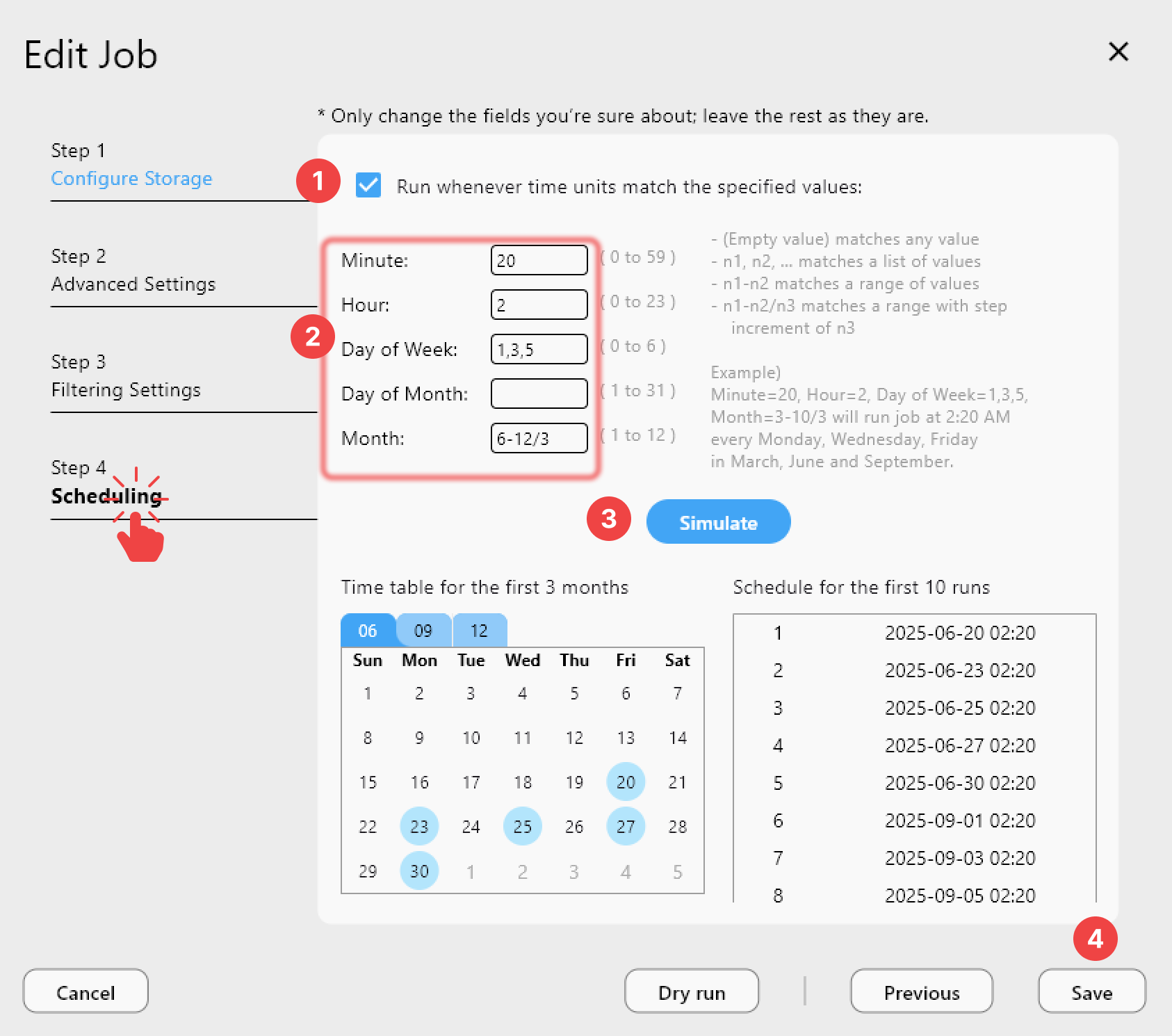
For ongoing protection rather than one-time transfers, a Sync job pointed at Netease can run on a recurring schedule (PLUS license) using crontab-style fields for minute, hour, day, and month. Job History then records every run — start time, duration, transfer speed, and file count — so you have a concrete audit trail of what moved and when, without digging through raw log files.
Getting Started
- Download RcloneView from rcloneview.com.
- Create a new remote, choose the S3-compatible type, and enter your Netease Access Key, Secret Key, and endpoint.
- Open the Netease remote in an Explorer panel and confirm your buckets and objects load correctly.
- Set up a Sync job to mirror the bucket to another remote or a local disk, running a dry run first.
Once Netease is set up as a remote, it behaves like every other storage provider in RcloneView — one less system to manage separately from the rest of your cloud stack.
Related Guides:
- Manage China Mobile Storage — Sync and Backup Files with RcloneView
- Manage Alibaba OSS Cloud Storage — Sync and Backup with RcloneView
- Manage Huawei OBS Cloud Storage — Sync and Backup with RcloneView
Supported Cloud Providers